DALIAN TECH MACHINERY CO.LTD

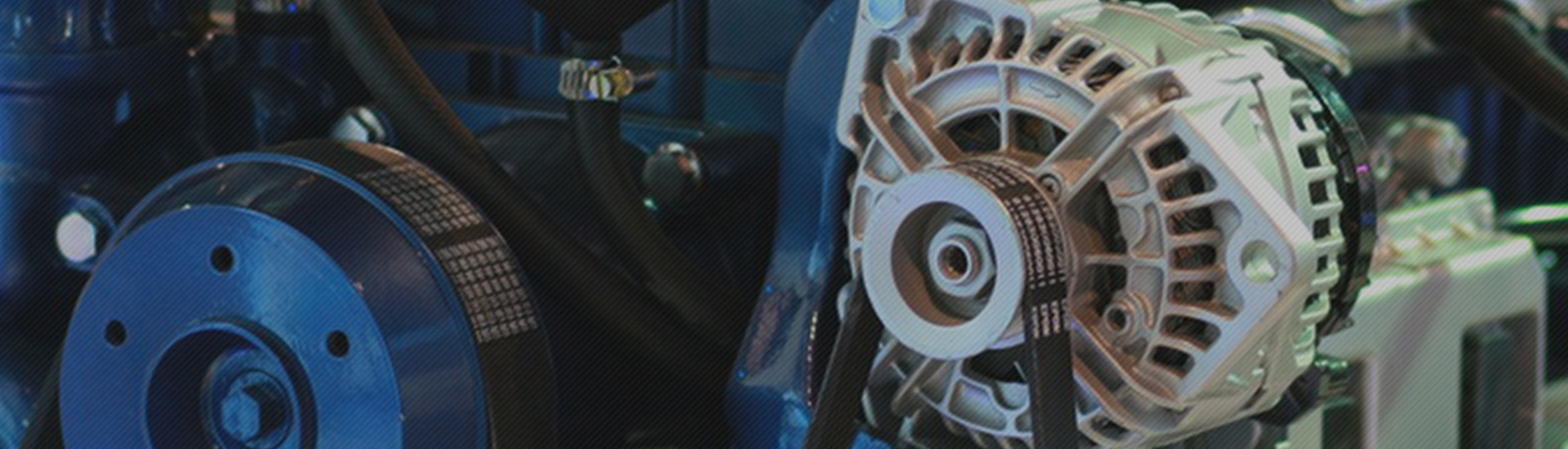
FOCUS ON YOUR ENTRUST
The high-quality TECHNOBELT (Neoprene and Polyurethane Belt) has won high praise from many famous original equipment manufacturers and maintenance companies all over the world.
View details
FOCUS ON YOUR ENTRUST
The high-quality TECHNOBELT (Neoprene and Polyurethane Belt) has won high praise from many famous original equipment manufacturers and maintenance companies all over the world.
View detailsThe difference between Rubber Timing belt and PU Timing belt
Rubber Timing belt:
(1) Fiberglass tensile layer
The fiberglass tensile layer is a rope composed of multiple strands of fiberglass, which is spirally wound along the width of the tape at the nodal position. It has high strength, low elongation, good corrosion resistance, and heat resistance.
(2) Chlorine J tape back
Chloroprene tape back firmly adheres fiberglass at the nodal position, playing a role in protecting tensile materials. When using a backing in transmission, it can prevent damage caused by friction. It is better than polyurethane synchronous belt back
It has superior resistance to hydrolysis and heat resistance.
(3) Chloroprene tape teeth
The toothed belt is composed of chloroprene rubber with high shear strength and appropriate hardness. It requires precise molding and precise distribution position to correctly mesh with the grooves of the belt wheel. The tooth root should maintain a specified distance from the pitch line, and the pitch should remain unchanged during bending
(4) Nylon wrapping layer
The nylon wrapping layer is the anti friction part of the protective tape, which should have superior wear resistance and is composed of nylon cloth with a low friction coefficient.
The hydrolysis resistance, heat resistance, and impact resistance of rubber synchronous belts are superior to those of polyurethane synchronous belts. Its transmission power range is large, especially in high-power transmission, and polyurethane synchronous belts cannot be compared with it.
PU Timing belt:
(1) Polyurethane synchronous belts are generally made of steel wire as the tensile core and cast with polyester, which has the characteristics of oil resistance, impact resistance, and aesthetics.
(2) Polyurethane synchronous belts are harder and more wear-resistant, but their conductivity is not as good as rubber synchronous belts.
(3) Chemical properties
Anti-aging, anti-hydrolysis, anti UV UVA, anti-ozone
Working temperature: -30 ° C~+80 ° C, can withstand up to+110 ° C in a short period of time
Highly oil resistant, ester resistant, resistant to most acids and alkalis corrosion
Rubber synchronous belt has good flexibility and water resistance, PU is not resistant to water, has poor reciprocating performance, poor high and low temperature performance, and has good wear resistance. Under static conditions at room temperature, PU polyurethane synchronous belts are good, while rubber synchronous belts are good.
Polyurethane synchronous belt is a thermoplastic polyurethane material with high modulus, high strength, high elasticity, small permanent deformation, good flexibility, excellent wear resistance, oil resistance, low temperature resistance, and aging resistance, which can meet medical and health requirements. The wear resistance of polyurethane TPU synchronous belt is 8 times that of rubber synchronous belt, which is hygienic and more suitable for use in the food, medical, and clean production industries. Currently, TPU synchronous belt has gradually replaced rubber synchronous belt, TPU synchronous belts are widely used in industries such as computer embroidery machines, beverage machinery, and glass manufacturing.
Messages
Contact Us
DALIAN TECH MACHINERY CO.LTD
Address:No.13 Ganjingzi District, Dalian, Liaoning province, China
Email:sales@maxpowergroup.cn